
THE STORY OF ORIGINS OF POPPI

The story of origins OF Poppi is still obscure and based on assumptions rather than documented references and certain facts.
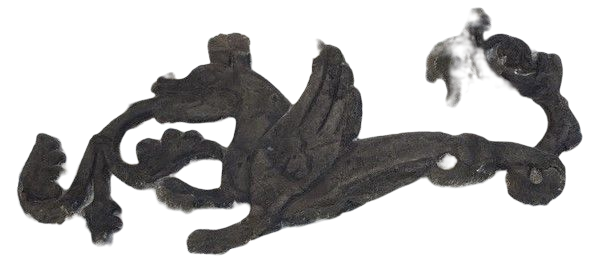
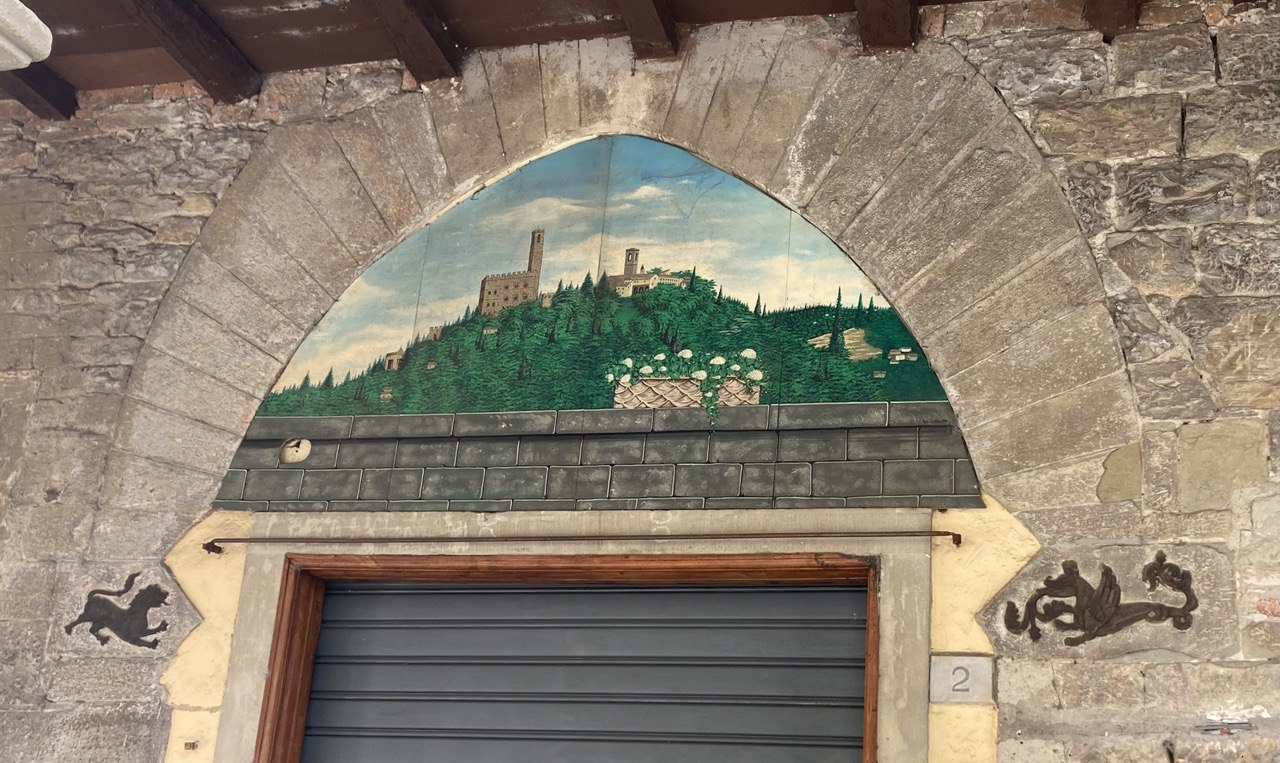
If we want to believe what was written by Giovanni Villani, the Florentine historian and author of the “Cronica”, Poppi would be a Roman creature. In fact, Villani recounts that, at the time of Julius Caesar, in 63 BC, while the consuls Cicero and Macrinus were destroying Fiesole with their army, the Roman Senate, at the request of Caesar himself, had sent a colony of those soldiers to live in Poppi. Even today you can see, under the arcades, on the sides of a shop, where Porta Ancherona used to be, on one side the symbol of Caesar (i.e. a winged dragon that throws a lily from its mouth), on the other a lion running with its jaws wide open and its tongue sticking out, a possible reference to the ancient founder. Repetti also lets us know that in the space of twenty-five years Cesare founded 28 colonies and it is probable that one of these was sent to the hill, located in a strategic position in the center of the Casentino valley, where perhaps the members of the “gens” Pompilia or, perhaps, Pupia.
THE STORY OF ORIGINS OF POPPI

The story of origins OF Poppi is still obscure and based on assumptions rather than documented references and certain facts.
If we want to believe what was written by Giovanni Villani, the Florentine historian and author of the “Cronica”, Poppi would be a Roman creature. In fact, Villani recounts that, at the time of Julius Caesar, in 63 BC, while the consuls Cicero and Macrinus were destroying Fiesole with their army, the Roman Senate, at the request of Caesar himself, had sent a colony of those soldiers to live in Poppi. Even today you can see, under the arcades, on the sides of a shop, where Porta Ancherona used to be, on one side the symbol of Caesar (i.e. a winged dragon that throws a lily from its mouth), on the other a lion running with its jaws wide open and its tongue sticking out, a possible reference to the ancient founder. Repetti also lets us know that in the space of twenty-five years Cesare founded 28 colonies and it is probable that one of these was sent to the hill, located in a strategic position in the center of the Casentino valley, where perhaps the members of the “gens” Pompilia or, perhaps, Pupia.

THE ORIGINS AND THE NAME OF POPPI

By Natale Virgili

1
2
3
1

Porta Ancherona

2

Symbol of Caesar (winged dragon throwing a lily from its mouth)

3

Lion running with jaws wide open and tongue out, a possible reference to the ancient founder.

Also on the origin of the name there are various conjectures, from “puppis” to “Populum”, but perhaps we can consider the derivation precisely from the name of a Roman “gens”. The colony certainly grew, developed the walls, forming a town within its own castle; it had some strategic importance, if it seems that the Romans built a solid bridge over the Arno to facilitate connections with other roads in the Casentino.

After the fall of the Roman Empire, Totila descended into Italy and, having destroyed Florence, spread with his hordes over the territory of Tuscany: it is said that once he arrived in Casentino, he destroyed the walls of Poppi. The Guidi counts boasted of having rebuilt the walls destroyed by Attila (but he never reached Tuscany), confusing him with Totila, but informing us at the same time that walls surrounded the castle before Totila demolished them in the year 542.